Developments in the Middle East

Since Saturday, February 28, 2026, the security situation in the Persian Gulf, Strait of Hormuz, and adjacent waters has deteriorated due to the armed conflict in the Middle East. It is therefore important that de‑escalation in the region takes place as soon as possible.
Currently, nearly a hundred ships owned by Dutch shipowners are in the Persian Gulf, slightly less than half of which fly the Dutch flag. On the Dutch-flagged ships, there are over 500 crew members, of which over 100 are of Dutch nationality. The situation in the area remains unpredictable, and the safety of the ships and their crew is of utmost priority. As far as we know, no ships of Dutch shipowners have been caught in the cross-fires to date.
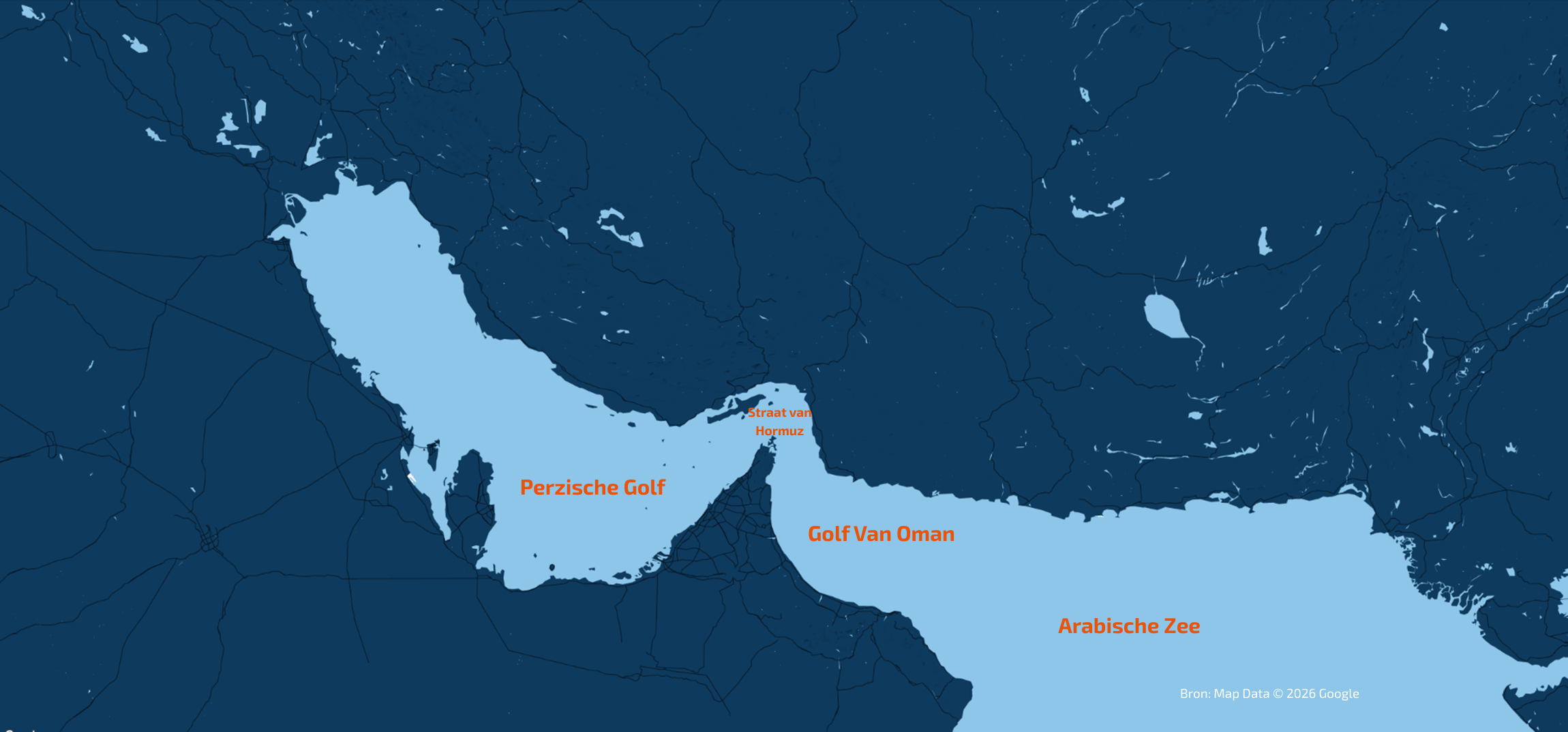
The Iranian Revolutionary Guard continues to claim that Iran has closed the Strait of Hormuz and also continues to carry out attacks on ships. As a result, the safe departure of ships from the Persian Gulf has become impossible. The principle of Mare Liberum is therefore under immense pressure. At present, no areas in the Persian Gulf, the Strait of Hormuz, or adjacent waters can be considered safe. This places a heavy demand on shipowners and crews when assessing risks and possible scenarios. Many ships are currently anchored in the Persian Gulf—both ships awaiting safe passage and those previously engaged in offshore operations. Ships that were en route to the region have halted their journeys, as rerouting is not possible. This situation affects global trade and the economy, given that one‑fifth of all oil exports and a quarter of LNG exports pass through the Strait of Hormuz.
There are currently no indications that Dutch ships in the Persian Gulf lack food, drinking water, or other essential supplies. Sea‑going ships are typically stocked for extended periods, and shipowners prioritize this, ensuring sufficient provisions are available on board. It remains uncertain to what extent local resupply in the Middle East will remain feasible, as this depends on the duration of the situation. For now, we see no cause for concern in this respect. The KVNR continues to monitor developments closely and remains in contact with the ships in the region.
The conflict in the Middle East impacts shipping in multiple ways. This includes direct effects, such as attacks on ports and ships, as well as indirect effects. For example, crew changes worldwide are currently extremely challenging due to reduced and irregular air traffic in the region.
The KVNR advises shipowners in the region to follow the guidance of their flag state. The guidance for ships sailing under the Dutch flag is not publicly available for safety reasons. The KVNR continues to closely monitor the situation.