Shadow fleet sails under false flags of the Kingdom of the Netherlands

The shadow fleet is generally finding it increasingly difficult to stay operational. Recent research by investigative journalism platform Follow The Money shows that operators of shadow fleet ships for the benefit of Russian overseas trade are quite inventive in circumventing the sanctions. While various ship registers, such as the register of Panama, are taking action to expel the Russian shadow fleet from their registers, are these ships suddenly sailing under nonexistent flags.
Currently, there are ships from the Russian shadow fleet also sailing under the flags of Aruba and Sint Maarten. However, both countries in the Kingdom of the Netherlands do not have a flag register for sea-going ships and therefore do not issue Certificate of Registry. A weekly check by the KVNR in August 2025 in an authoritative international database revealed that several dozen ships are fraudulently flying the flags of Aruba, Sint Maarten, and Curaçao. This number is changing regularly.
Dutch shipowners concerned
The registers for sea-going ships in the Kingdom are located in the countries of the Netherlands and Curaçao. Ships listed in these registers sail under the so-called Kingdom flag. The KVNR considers the flying of fraudulent flags to be very damaging to the reputation of the Netherlands and Curaçao. This practice also affects the Dutch shipowners who are rightfully entitled to fly the Kingdom flag. The KVNR is also concerned about the safety and working conditions of the seafarers on board these ships.
There are also concerns about the potential environmental risks posed by these shadow fleet ships. These are often oil tankers whose technical condition often leaves much to be desired, increasing the risk of environmental disasters. The internationally required insurance against, for example, oil pollution is often are often issued by dubious insurance companies. If an oil leak occurs, the coastal state (read: the taxpayer) will have to bear the costs, as the insurer is likely not solvent and does not have the funds to pay out. And this is aside from situations where a legitimate ship collides with a fraudulent ship. Who can be held liable for the damages? Plenty of reasons to take action against this practise.
Leading Role of the Netherlands
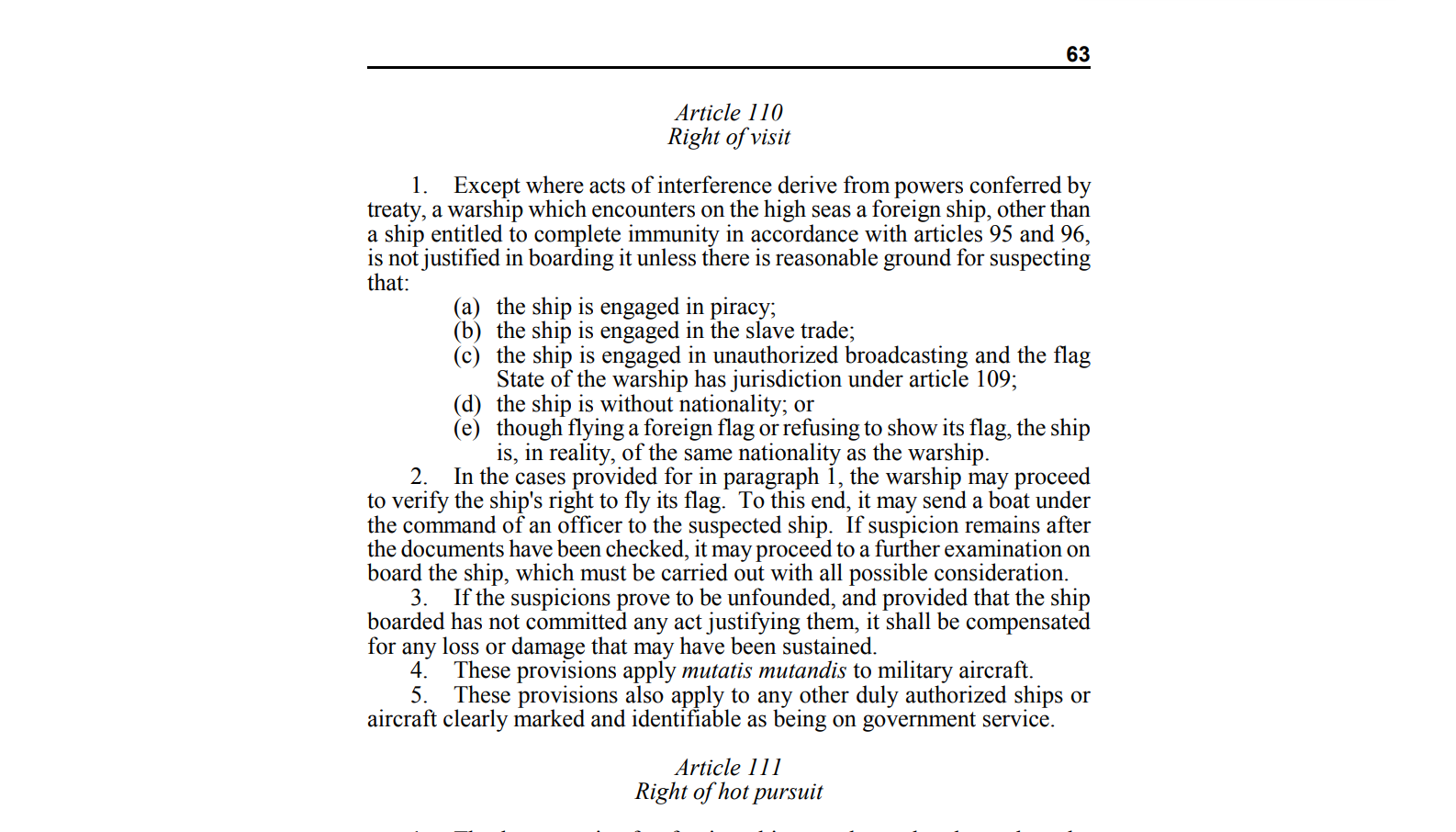
What makes the situation particularly concerning is that these ships sometimes sail close to the Netherlands, specifically through the Dutch Exclusive Economic Zone (EEZ). Because the fraudulent ships claim to fly a flag from one of the countries of the Kingdom, the Netherlands is in a unique position to take a leading role in combating these ships. This can certainly be done within its own waters. However, international law of the sea seems to allow for action even on the high seas against stateless ships. To enforce rules on the high seas, given the available capacity, it would be wise for the Netherlands to closely collaborate with other countries. Additionally, attention should also be given to enforcement in the waters of coastal states.
Dutch government already aware
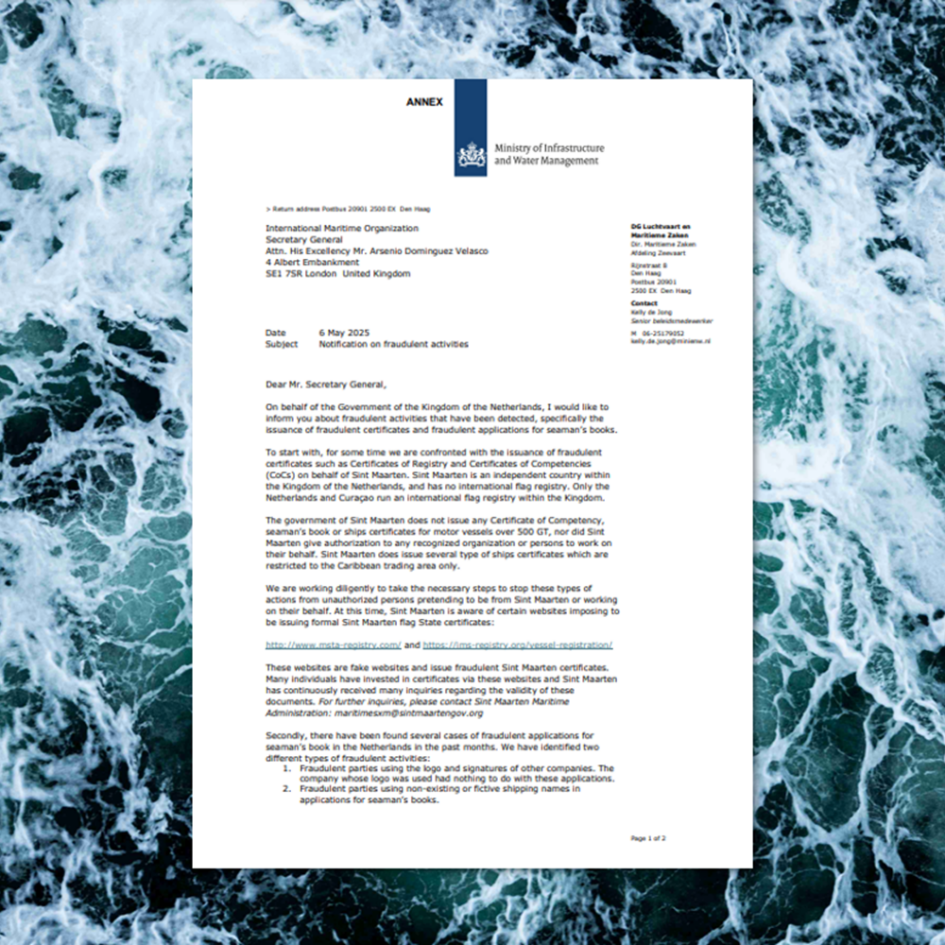
The Dutch government has fortunately been aware of these illegal practices for some time and has reported this to the IMO. At the time of this letter to the IMO, only fraudulent sea letters and certificates of competence were allegedly issued by Sint Maarten. It now appears that this practice has expanded to Aruba and Curaçao. The governments of Sint Maarten, Aruba, and Curaçao have also issued various calls to foreign port authorities to detect these fraudulent activities and, where necessary, initiate criminal prosecution.
The KVNR appreciates the Dutch government's letter as an important step but simultaneously urges the Dutch authorities to do more. The KVNR believes this would be most effective through close collaboration with like-minded countries. Furthermore, it is important for the Netherlands to take concrete action to detain ships flying fraudulent flags of a country within the Kingdom as soon as they enter Dutch waters.