Visit to the heart of Brussels
Industry visiting European policy
Brussels is the beating heart of the European Union. Here, the European Commission works in together with the European Parliament and member states on European legislation and regulation, including for maritime shipping.
Not an easy task with ithe 27 member states. Sometimes, even with the Commissions best efforts, it results in legislation and regulation in which shipowners notice a gap between the daily reality and the plans of the European Commission.
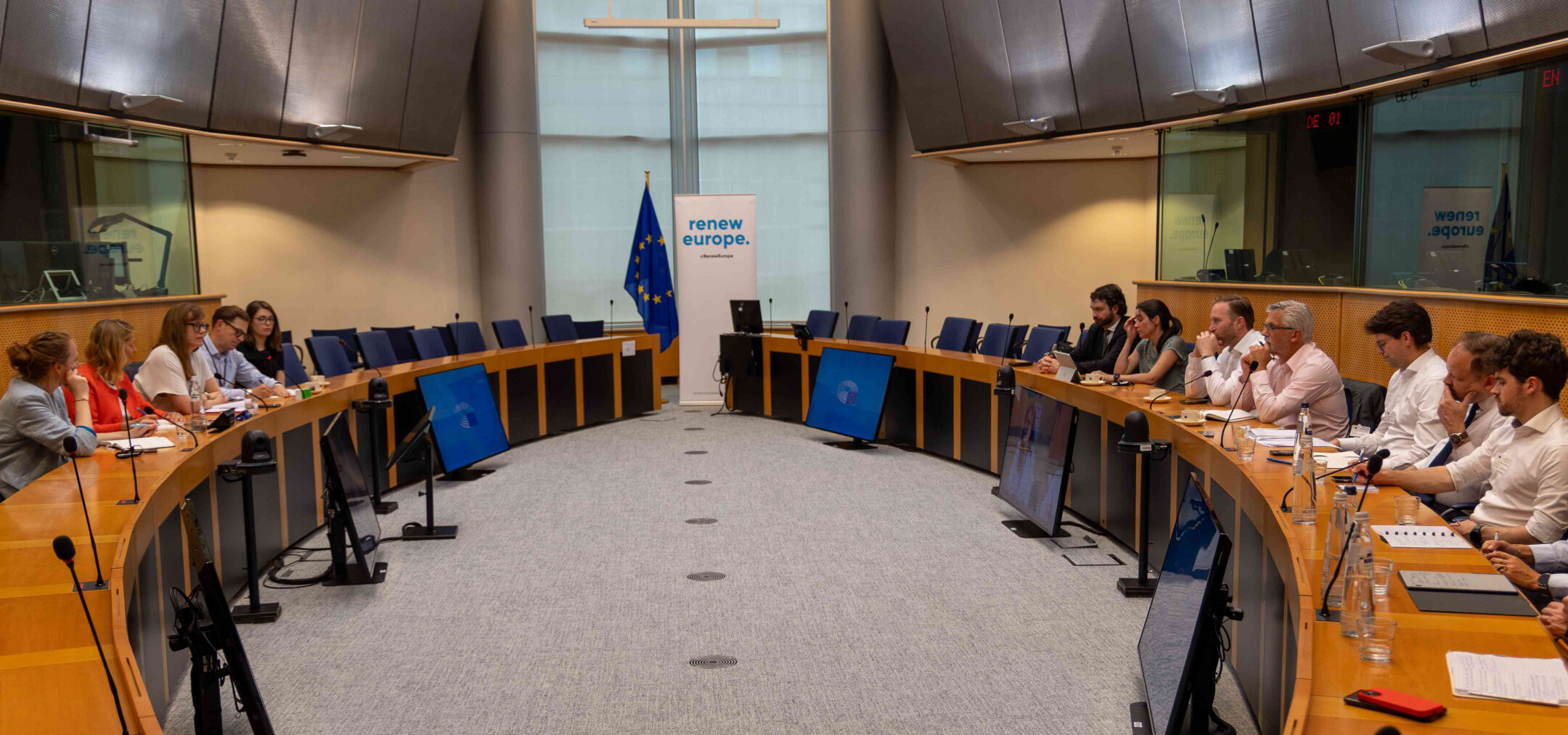
To bring practice and policy closer together, six members of the KVNR traveled to Brussels last Wednesday for a meeting with the Dutch Permanent Representation, VVD member of the European Parliament Jeannette Baljeu, and Polona Gregorin of DG Clima.
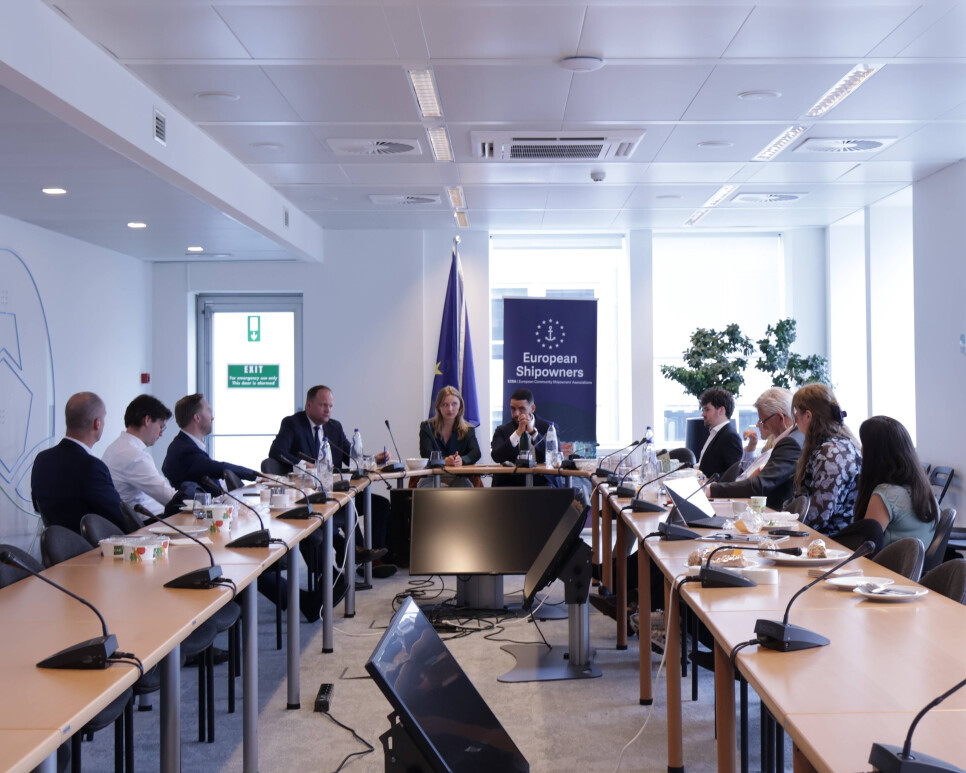
Permanent Representation
In the morning, the delegation of the KVNR spoke with Mohamed El-Yemlahi (transport attaché), Marthe Huigsloot (climate attaché). They discussed various current maritime developments in Brussels, such as:
The upcoming revision of EU-ETS
The upcoming IMO measure NZF
Reducing administrative burdens around EU-ETS and FuelEU Maritime
The Innovation Fund and the application and scaling up of clean technology and fuels
Additionally, the Sustainable Transport Investment Plan (STIP) and the Maritime Industrial Strategy were briefly discussed.
European Parliament and DG CLIMA
In the afternoon, the next meeting took place with MEP Jeannette Baljeu joined by Polona Gregorin of DG CLIMA.
It was a highly valuable and open dialogue about the upcoming revision of
“Our ambition to reach net zero is great, but we need regulations that start from well to wake and monitoring that is much simpler”
The afternoon once again emphasized how important it is to have healthy discussions between the people working in Brussels and the maritime sector. These conversations help to reach effective and workable regulations. This was also confirmed by Jeannette Baljeu. Who indicated that the scaling up of clean fuels is still a chicken-and-egg problem, and to solve that problem, we need to have these kind of discussions with each other.
KVNR colleague Nick Lurkin pointed out that this vicious circle in the scaling up of clean fuels can be broken by cleverly using the proceeds from climate pricing (preferably globally through IMO) to promote the scaling up of advanced biofuels, green methanol, and bio-LNG instead of focusing solely on 'state of the art' projects.
“‘This way, we achieve more and give fuel producers and suppliers more certainty to invest in the production and scaling up of those cleaner fuels.’”
The European Commission shared that they are glad to evaluate and consider the concrete examples from the KVNR members. In light of the IMO Net Zero Framework agreement, the Commission stated that it is important for everyone to have these global agreements, but that there cannot be lower ambitions with the introduction of an IMO instrument.
On behalf of the KVNR, we would lke to thank all dialogue partners for their time, openness, and interest.